
Starlink vs Fibre vs 5G: Which Broadband Is Best for Rural Ireland?
Quick Answer: Which is better for rural Ireland: Starlink or Fibre? Fibre broadband is the greatest option for rural Ireland, with the fastest speeds (up to 2Gbps), lowest latency (sub 15ms) and no weather interference. If fibre is not yet available at your Eircode, Starlink is the best alternative. It provides consistent 100-200 Mbps speeds anywhere with a clear sky view, outperforming spotty rural 5G connections.
For years, living down a country lane in Ireland meant suffering with brutal internet speeds over decaying copper lines. But the landscape looks radically different today. If you are researching Starlink vs. Fibre vs. 5G Ireland, you finally have real choices.
The rollout of National Broadband Ireland (NBI) fibre is rapidly reaching deep into the countryside. Simultaneously, mobile networks are upgrading rural masts, and SpaceX has thousands of satellites orbiting overhead.
However, having options creates a headache. Should you sign up for fibre, mount a satellite dish, or plug in a 5G router? Which technology survives Atlantic winter storms? The financial side has shifted, too, with one major provider removing upfront equipment costs in 2026.
If you are weighing up satellite internet options in Ireland, you need a real-world breakdown. We will examine true download speeds, hidden contract traps, and weather resilience to help you choose the best setup for your home.
1. Fibre Broadband (FTTH): The Unmatched Benchmark
How Fibre Works
The NBI project is in overdrive. As it enters its final phase in 2026, it is on track to pass 566,000 rural premises. When researching the differences between FTTC and FTTH, pure FTTH (Fibre to the Home) is all that matters. It replaces slow copper wiring with thin strands of glass, carrying data via light pulses directly into your hallway.
Upsides and Downsides
The advantages are impossible to beat. Latency hovers between 5 and 15 milliseconds. You get symmetrical speeds up to 2Gbps. Because the infrastructure is fixed, your connection remains rock-solid during intense gales.
The downsides are purely installation logistics. Getting an optical cable to a remote house can involve clearing trees or digging up private driveways. Most importantly, many townlands are still waiting for the NBI trucks.
Cost Structure
Providers compete aggressively with introductory rates between €30 and €40 per month. Read the fine print carefully, as standard monthly costs usually jump to €70 or €75 after the promotional window closes.
Pro Tip: If the NBI checker shows fibre is live at your Eircode, order it immediately. It is the best long-term option.
2. Starlink: The Go-Anywhere Solution
How the Satellite Array Handles Irish Skies
Starlink bypasses ground infrastructure using Low Earth Orbit satellites. Traditional satellite internet was notoriously slow, but these modern satellites fly much lower, eliminating severe delays.
In real-world testing, download speeds consistently hit 100 to 250 Mbps. Latency sits at a manageable 40 to 70 milliseconds. For isolated properties, this feels like moving straight into the future.
True Pros and Cons
The standout benefit is immediate availability. Starlink covers the entire island today. If you are stuck waiting for fibre, you can get high-speed internet next week.
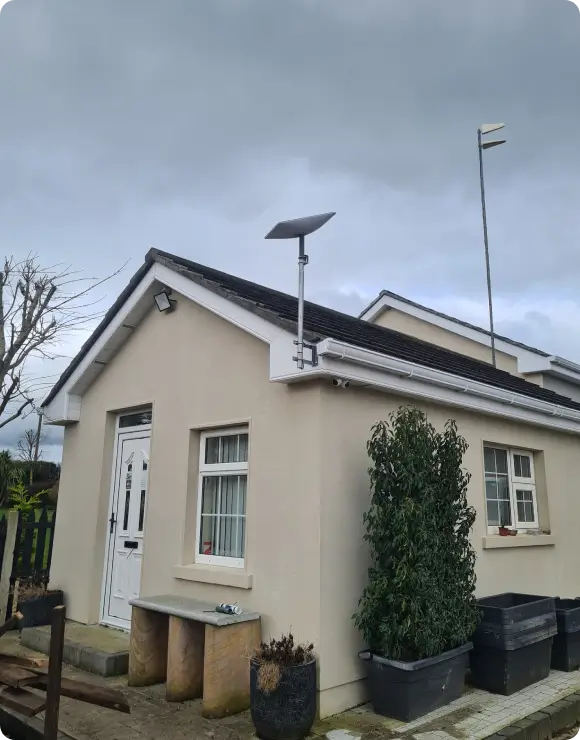
The higher latency means competitive gamers will experience a slight delay. You need to set a dish outside in a clear view of the sky. However, for a permanent arrangement that will withstand violent storms, a professional Starlink dish mounting is advised.
Current Pricing Realities
The financial barrier has dropped significantly in 2026. Residential tiers start at €35 per month. The upfront equipment cost used to be a major hurdle, but there is now a promotional offer providing the hardware kit for zero Euros down. Be careful, though. If you cancel the service and fail to return the equipment, you face a €349 charge.
3. 5G Home Broadband: The Plug-and-Play Option
How Cellular Broadband Operates
This setup uses the same mobile data networks powering your smartphone. Providers send a home router containing a dedicated SIM card. You plug it into a wall socket, and internal antennas pick up data from the nearest mast.
Main Benefits and Flaws
The best part about 5G broadband is how fast it is to set up. There is no need for engineers or drilling through walls. It is completely plug-and-play and perfect for renters.
The biggest drawback is signal vulnerability, as cellular connections struggle with distance and physical obstacles. If your home has thick stone walls, antennas will struggle to catch a clean signal. Many homeowners end up researching ways to improve the 5G signal through stone walls to fix this. Furthermore, you share mast bandwidth with every mobile phone in the area, meaning speeds can plummet during peak evening streaming hours.
Budget Breakdown
5G is easily the most wallet-friendly option. Prices generally range between €25 and €40 per month for unlimited data on rolling or 12-month contracts.
Common Mistake: Always test a mobile phone on the same network inside your house before signing a 12-month router contract.
Head-to-Head Comparison Matrix
| Feature | Best Option | Why It Wins |
| Remote Work & Video Calls | Fibre | Flawless stability and minimal ping ensure Zoom calls never stutter. |
| Speed of Setup & Renters | 5G | Pick up a router in-store and have Wi-Fi running in ten minutes. |
| Deep Rural / No Line of Sight | Starlink | Doesn’t care about deep valleys or distance from the local exchange. |
| Competitive Online Gaming | Fibre | Ultra-low sub-15ms response times provide a massive advantage. |
Why Trust Smart Sat Connect For Your Rural Broadband Setup?
Our installation teams spend every single day on the roads, working directly in the rural communities of Ireland. We understand the unique architectural challenges of optimizing wireless signals inside traditional stone cottages.
We have watched real-world 5G connection speeds tumble from 150Mbps down to 20Mbps during the 8 PM streaming peak in rural Kerry. Meanwhile, an adjacent property running a Starlink dish maintained a perfectly steady 120Mbps. We are independent of any single network provider. Our mission is to analyze your Eircode and line-of-sight, recommending the infrastructure that delivers genuine results for your budget.
Frequently Asked Questions
Q. Is Starlink genuinely better than a rural 5G connection?
A. Yes. 5G is highly prone to evening congestion and signal degradation. Starlink offers a dedicated beam from space, resulting in far more reliable speeds.
Q. Will bad winter weather cause my internet to drop completely?
A. Fibre is totally immune to weather. Starlink might experience brief slowdowns during intense downpours. 5G fluctuates when high winds cause distant trees to block the line of sight.
Q. How can I find out when NBI fibre will reach my address?
A. Visit the National Broadband Ireland portal and type your Eircode into their map.
Q. Can I do a DIY installation for Starlink?
A. Yes, it comes with a basic ground stand. However, for a permanent solution that survives heavy storms, professional roof mounting is highly recommended.
Conclusion: Taking the Next Step
Sorting out your home internet shouldn’t be a guessing game. First, look up your Eircode on the NBI mapping tool. Second, test the outdoor 5G signal strength around your property. Third, download the Starlink app to scan your roofline for tree obstructions.
Fibre is the gold standard. Starlink is the problem-solver for deep country living, and 5G offers a cheap alternative for edge-of-town homes. Book a comprehensive site survey with our team today, or run your Eircode through our online coverage checker to discover your best options!

Leave a Reply
Want to join the discussion?Feel free to contribute!